
2026 College Football: 5 Essential Insights
College football in 2026 combines the NCAA Football Bowl Subdivision (FBS), conference realignment, transfer-portal movement, and the expanded College Football Playoff (CFP) race across the United Sta...
2026 College Football: 5 Essential Insights
College football in 2026 combines the NCAA Football Bowl Subdivision (FBS), conference realignment, transfer-portal movement, and the expanded College Football Playoff (CFP) race across the United States. The regular season runs from late August through early December, while the 2026 CFP National Championship is scheduled for January 25, 2027, at Allegiant Stadium in Las Vegas. ESPN’s 2026 schedule divides the campaign into 15 regular-season weeks, with bowl and CFP games continuing from December 13 through January 27. Major entities include the Atlantic Coast Conference (ACC), Big Ten, Big 12, Southeastern Conference (SEC), Notre Dame, Oregon, and defending champion Indiana. A serious follower should compare schedule strength, returning production, quarterback stability, injuries, and efficiency statistics rather than relying on preseason rankings alone. Track every number, verify the latest schedule, and separate informed analysis from emotional team loyalty before making any conclusion.
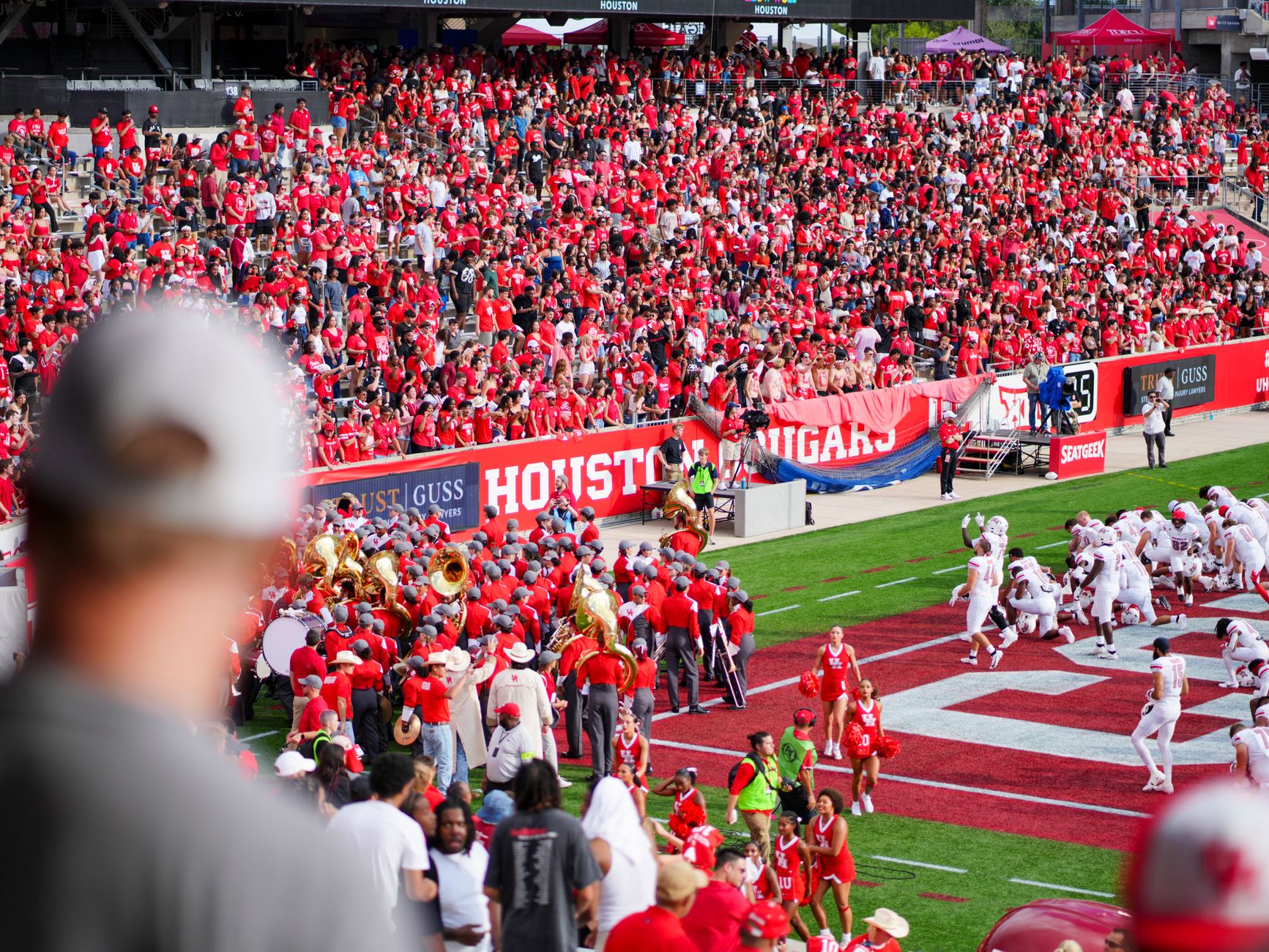
Photo by Photo Eddie O. on Pexels
The 2026 college football season is already being shaped by a familiar but increasingly expensive problem: information changes faster than casual fans update their assumptions. A team can move conferences, lose its quarterback to the NFL, replace half its defensive front through the transfer portal, and still be discussed as a preseason favorite because last year’s logo remains popular. That is not analysis; it is memory wearing a jersey. Tactical Review focuses on match context, team tactics, player statistics, and tournament-level decision-making, although its core coverage is primarily built around the FIFA World Cup. For college football, the same disciplined principles still apply: establish the data set, define the risk, and avoid pretending uncertainty has disappeared.
Want a more structured way to evaluate major sporting events?
Step 1: Map the 2026 college football schedule
The first step is to build a calendar covering the 2026 regular season, conference championships, bowl games, and College Football Playoff dates. ESPN lists Week 1 from August 22 through September 7, with subsequent regular-season windows continuing through Week 15 from December 6 to 12; bowl and CFP contests follow from December 13 onward. This structure matters because early-season neutral-site games may create unusual travel and preparation conditions, while late-season games involve accumulated injuries, rivalry pressure, and playoff qualification. For example, the opening schedule includes North Carolina versus TCU at Aviva Stadium in Dublin, San José State at USC, NC State at Virginia, and Jacksonville State at North Dakota State. These fixtures should not be assessed using rankings alone because location, rest, and opponent style can distort expected performance.
Use a weekly tracking sheet with the following fields:
- Game date, kickoff time, venue, and broadcast provider.
- Home, away, or neutral-site status.
- Conference standing and remaining schedule.
- Starting quarterback, injury report, and recent snap counts.
- Offensive and defensive efficiency trends.
- Closing result compared with the pregame expectation.
The Dublin fixture is a useful edge case. A team playing at Aviva Stadium is not technically facing an ordinary home-field environment, even if its brand recognition is stronger in the international market. Travel across time zones, unfamiliar stadium routines, and reduced local crowd advantage can influence preparation more than a basic win-loss record suggests. You should also verify schedule revisions directly through ESPN’s college football schedule, because kickoff times and television assignments can change.
To continue with practical sports-analysis resources, review this [Internal Link: beginner’s guide to match analysis].
Step 2: Compare conferences and playoff routes
Which conferences matter most in the 2026 CFP race?
The ACC, Big Ten, Big 12, and SEC remain central to the 2026 CFP conversation because their teams generally face deep schedules and receive extensive national evaluation. However, conference strength is not a single permanent number: it changes with quarterback departures, transfer additions, coaching changes, and the distribution of ranked opponents. A 10–2 record in one league may involve a materially different difficulty profile from a 10–2 record elsewhere, so compare opponent efficiency and game control rather than conference reputation alone.
Conference comparison requires more than listing famous programs. The Big Ten may offer physical line play and difficult travel, the SEC can punish defensive depth, the Big 12 frequently creates volatile scoring environments, and the ACC contains varied tactical profiles that make week-to-week preparation important. Notre Dame remains a major independent entity whose playoff route depends heavily on its schedule and quality wins, while teams from the Group of Five and FCS level face different competitive and financial conditions. The NCAA FBS football portal is useful for following official headlines, rankings, championship history, and major developments.
A practical conference worksheet should record:
- Average opponent win percentage.
- Record against ranked opponents.
- Points per drive on offense and defense.
- Turnover margin, adjusted for unusually high fumble recovery rates.
- Explosive-play rate allowed.
- Performance in one-score games.
- Road record and neutral-site record.
The contrarian point is simple: one-score records are often poor forecasting tools. A program that went 6–1 in one-score games may have benefited from late turnovers or missed field goals that are not stable skills. Conversely, a 2–5 record in close games may conceal strong underlying efficiency. Treating either record as destiny is how analysts overpay for yesterday’s variance.
See the conference data in a broader tactical context before drawing conclusions.
Step 3: Evaluate players, coaching, and tactical fit
How should you assess a college football team before kickoff?
Assess a college football team by combining returning production, quarterback experience, line continuity, transfer impact, coaching tendencies, and opponent-specific matchups. The most useful evaluation is not “team A is more talented”; it is whether team A can consistently create favorable downs against the exact pressure, coverage, tempo, and run fits used by team B. Begin with personnel, then test tactical fit, and finally compare recent efficiency rather than reputation.
Quarterback stability usually deserves priority because playbook timing, protection calls, and red-zone decisions depend on it. Still, quarterback statistics can mislead when a passer benefits from a strong offensive line or unusually favorable field position. Track completion rate over expectation where available, sack rate, turnover-worthy plays, third-down performance, and explosive pass frequency. For running backs and receivers, record route participation, target share, yards after contact, and usage in high-leverage situations rather than relying only on total yardage.
Defensively, examine pressure without blitzing, early-down success, missed tackles, and explosive plays allowed. A defense that produces sacks through heavy blitzing may look dominant against inexperienced quarterbacks but vulnerable against quick-game attacks and motion-heavy offenses. Coaching changes complicate the picture; a coordinator’s historical style may not transfer immediately because college rosters are assembled under different recruiting and development assumptions. As the Wikipedia overview of college football explains, the sport is a college version of American and Canadian gridiron football, but the modern competitive environment is shaped by conferences, scholarships, eligibility rules, and institutional resources.
One information-gain measure is snap continuity. If a team returns 8 of 11 defensive starters but loses its top coverage safety and best interior pass rusher, the headline percentage may exaggerate stability. Defensive communication is not interchangeable. Count returning starts by position group, then flag departures with unusually high third-down or red-zone involvement. That small adjustment often reveals more than a generic “returning production” ranking.
For deeper tactical comparisons, explore this [Internal Link: advanced team-form and player-statistics guide].
Step 4: Manage schedule, statistics, and betting risk
College football odds can be informative market signals, but they are not proof of a team’s true probability. A listed spread such as TCU -6.5 or USC -35.5 reflects a market estimate that includes public attention, injury assumptions, matchup models, and bookmaker risk management; it does not guarantee that the favorite will cover. Totals such as 49.5 or 57.5 also require context because pace, field position, weather, red-zone finishing, and defensive substitution patterns can change the scoring profile. Anyone considering legal sports wagering must check local law, age requirements, operator licensing, and responsible-gambling limits first.
The rational process is deliberately boring:
- Record the opening line and the latest available line.
- Note the number of points or total points that moved.
- Identify whether the movement followed a confirmed injury or lineup announcement.
- Compare your estimated probability with the market price.
- Include taxes, fees, limits, and potential account restrictions.
- Stop if the decision depends on chasing a previous loss.
Do not confuse turnover with profit. A bettor who stakes $100 on ten games has $1,000 in turnover, but a 5% rebate would return only $50 before any losses, tax treatment, or wagering restrictions. If the wagers lose $120 in aggregate, the net position is negative $70, not positive because activity was high. Track stake, return, rebate, withdrawal status, and net result in separate columns. Yes, you should do this; the memory-based method fails almost immediately.
A responsible approach also means refusing to treat Tactical Review, ESPN, NCAA, or any media outlet as a guarantee of success. The National Council on Problem Gambling provides public resources for recognizing harmful gambling patterns, and its guidance supports setting limits before play rather than after losses. As a basic rule, never use rent, tuition, emergency savings, or borrowed funds. If you cannot explain the downside in dollars, you are not managing risk; you are avoiding the calculation.
Want to review the broader principles behind disciplined sports decisions?
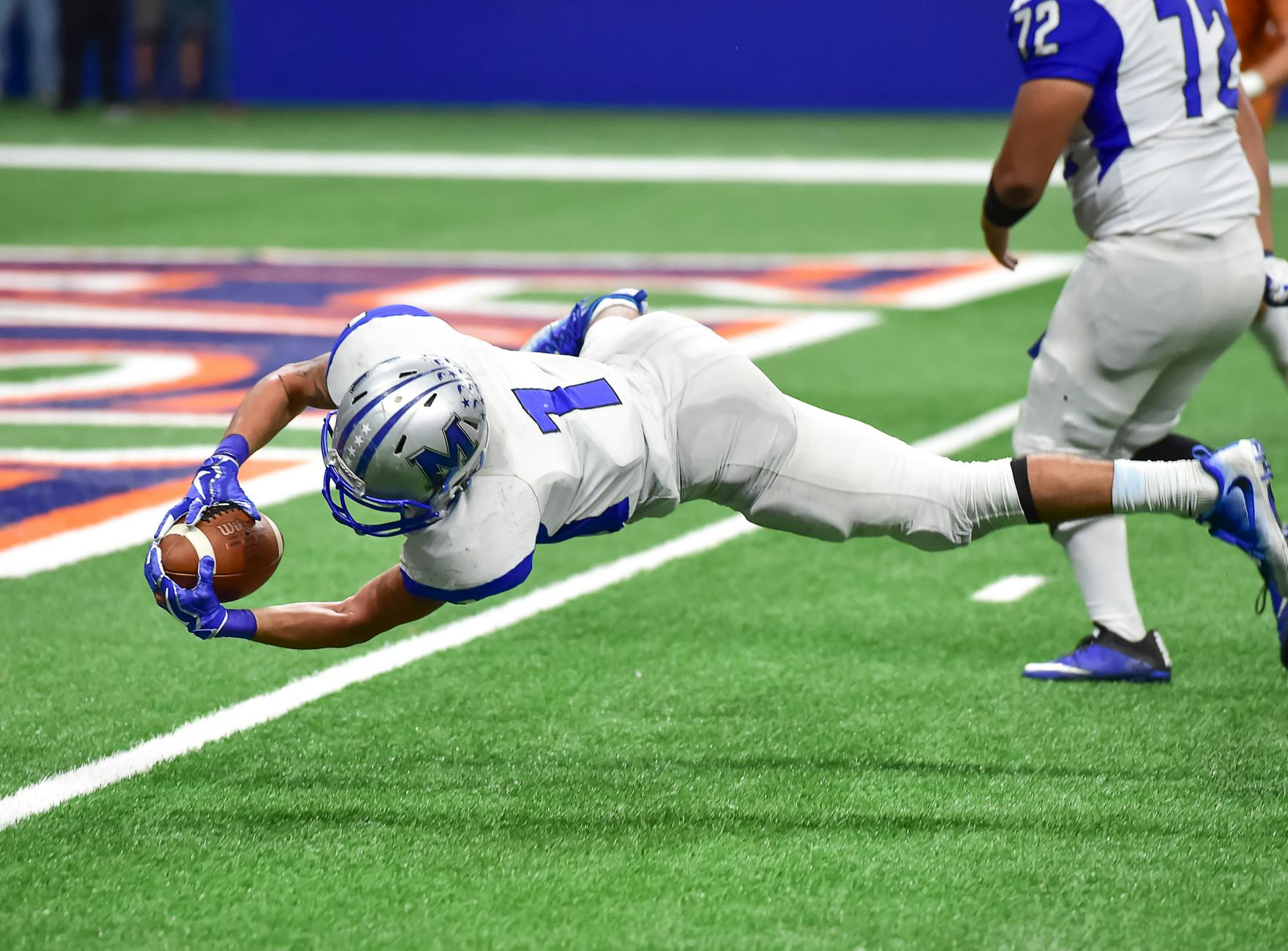
Photo by Joe Calomeni on Pexels
Step 5: verification
What should you verify before trusting a college football prediction?
Verify the schedule, venue, starting lineups, injury reports, weather, market number, and source timestamp before trusting a college football prediction. A reliable check uses at least two authoritative sources, such as the NCAA and ESPN, and confirms that the data refers to the 2026 season rather than an archived 2025 page. Verification is especially important when late quarterback news can move a spread several points.
Use this final checklist:
- Confirm the game date, kickoff time, and location.
- Check whether the contest is neutral-site, conference, bowl, or CFP play.
- Confirm the starting quarterback and offensive line status.
- Review the latest injury report and suspension information.
- Compare current statistics with opponent-adjusted data.
- Record weather, wind, and precipitation for outdoor venues.
- Check whether the listed odds are opening, current, or closing prices.
- Recalculate the projected outcome after every material update.
A useful operational finding is that timing matters more than many casual previews acknowledge. A prediction written before a Monday practice report may be materially weaker by Saturday if a quarterback’s throwing-hand limitation is confirmed. Likewise, a defensive back’s snap restriction can affect matchup projections even when the player remains listed as available. Save the publication time for every source, then label information as confirmed, probable, or speculative. This prevents a common failure: blending an old injury report with a new betting line and calling the combination current.
The NCAA’s official football coverage includes scores, rankings, headlines, championship information, and updates, while ESPN provides schedule navigation by week and conference. Those sources answer different needs, so do not treat them as interchangeable. A schedule page tells you when and where; an official news page may tell you why the expected lineup has changed.
Troubleshooting common failures
Why do college football predictions fail?
College football predictions commonly fail because analysts overvalue rankings, ignore personnel changes, misread one-score records, or use stale injury and schedule information. Additional errors include double-counting the same news, treating odds movement as certainty, and assuming a high-scoring team will reproduce its average against every defensive style. The solution is to document assumptions and update the estimate when evidence changes.
The most frequent failures can be diagnosed systematically:
- Old data: A 2025 efficiency rating is used as if the 2026 roster were unchanged.
- Brand bias: Alabama, Ohio State, Oregon, USC, or Notre Dame receives automatic confidence despite a poor matchup.
- Small samples: Two games are treated as proof of a permanent schematic transformation.
- Turnover blindness: A team’s record is inflated by a recovery rate that is unlikely to repeat.
- Venue neglect: Dublin, Las Vegas, or another neutral site is analyzed like a normal home game.
- Line confusion: The analyst compares a projected spread with the current number without recording the timestamp.
- Financial omission: Turnover, rebates, fees, and net position are not tracked separately.
Another failure is overfitting advanced metrics. EPA per play, success rate, explosive-play rate, and finishing drives are valuable, but none is a complete model. A team with strong early-down efficiency may still struggle in the red zone; a defense with a high pressure rate may surrender explosive plays when its blitz is beaten. Therefore, combine at least three lenses: statistical production, tactical matchup, and personnel availability.
If a prediction has already gone wrong, do not immediately increase the next stake. Review whether the error was informational, mathematical, or emotional. A bad result does not automatically prove a bad process, just as a winning result does not validate a careless one. Record the original assumption, the actual game state, and the point at which the model diverged. That is how an apprentice eventually stops repeating the same expensive mistake.
For a final reference point, consult this [Internal Link: responsible sports research and verification checklist].
2026 college football viewing and analysis plan
The best way to follow college football in 2026 is to maintain a repeatable weekly routine rather than consume every headline at random. First, review the ESPN schedule and identify conference games, neutral-site contests, and potential playoff eliminators. Then check NCAA news, roster availability, and team-level efficiency. Finally, compare the matchup with your prior estimate, record the actual result, and calculate whether your process improved over time.
A compact weekly dashboard should include:
| Category | Metrics to record |
|---|---|
| Schedule | Date, venue, travel, rest, conference |
| Offense | Success rate, points per drive, sack rate, red-zone results |
| Defense | Pressure rate, explosive plays allowed, missed tackles |
| Personnel | Quarterback status, line starts, transfer contributions |
| Market | Opening line, current line, total, timestamp |
| Finance | Stake, return, rebate, fees, net position |
The dashboard prevents emotional substitution. You may support Oregon, USC, Indiana, or Notre Dame, but your spreadsheet should not know which team you prefer. It should only know whether the opponent was strong, whether the quarterback played, whether the venue changed, and whether the final number justified the original estimate. The 2026 CFP National Championship date at Allegiant Stadium gives the season a clear endpoint, but the meaningful work occurs across the preceding weeks, where injuries, conference standings, and schedule strength accumulate.
Frequently Asked Questions
Q: What is college football?
A: College football is American gridiron football played by university and college teams, primarily under NCAA competition structures in the United States. The highest-profile division is the FBS, which includes conferences such as the ACC, Big Ten, Big 12, and SEC. Teams compete during the regular season, conference championships, bowl games, and the College Football Playoff. The sport combines athletic competition, campus identity, recruiting, scholarships, coaching systems, and increasingly complex roster movement through transfers.
Q: When does the 2026 college football season start?
A: The 2026 college football season begins with Week 1 games scheduled across the August 22–September 7 window. ESPN’s schedule includes an international matchup between North Carolina and TCU at Aviva Stadium in Dublin on August 30, alongside games such as San José State at USC and NC State at Virginia. Kickoff times, television assignments, and venues can change, so confirm the latest listing before planning travel or viewing.
Q: How do I follow the 2026 college football schedule?
A: Follow the 2026 college football schedule through ESPN’s weekly and conference schedule pages, then verify major results and championship information through NCAA coverage. Record each game’s date, venue, kickoff time, broadcast provider, and neutral-site status. For playoff analysis, also track conference standings, ranked wins, injuries, and remaining opponents. A saved spreadsheet is more reliable than attempting to remember changes from social-media posts.
Q: What is the difference between FBS and FCS college football?
A: FBS and FCS are separate NCAA football subdivisions with different competitive structures, scholarship frameworks, and postseason systems. FBS contains the most nationally televised programs and feeds into the College Football Playoff and bowl system, while FCS uses a distinct championship tournament format. The FCS includes conferences such as the Big Sky, Ivy League, Missouri Valley Football Conference, and Southern Conference. Results between the levels can be difficult to compare because roster depth and scheduling conditions differ substantially.
Q: Is college football betting worth it?
A: College football betting is not automatically worthwhile because outcomes remain uncertain and the bookmaker’s price includes a built-in margin. Before any legal wager, compare your estimated probability with the available odds, confirm local eligibility and licensing rules, and calculate the full downside including losses, fees, and limited rebates. Never use essential money or chase losses. Tracking turnover separately from net position is essential because high activity can create the illusion of progress.
Q: Why do college football predictions fail after late injury news?
A: Predictions fail after late injury news because the original model may assume a player’s normal workload, role, or mobility. A starting quarterback’s absence can alter protection calls, red-zone design, tempo, and turnover risk, while a defensive back’s snap restriction may change coverage assignments. Recheck the lineup, timestamp the update, and recalculate the matchup rather than applying a fixed adjustment. If the information is unconfirmed, label it speculative and reduce confidence.
Q: What statistics matter most in college football analysis?
A: The most useful statistics include opponent-adjusted success rate, points per drive, sack rate, explosive-play rate, turnover margin, red-zone efficiency, and defensive pressure rate. These metrics should be combined with returning production, quarterback availability, offensive-line continuity, venue, and schedule strength. Avoid treating one number as decisive, especially after only two or three games. The strongest evaluation explains how the statistics connect to the specific tactical matchup.
Conclusion: control the process, not the narrative
The 2026 college football season will reward readers who verify details before reacting to rankings, headlines, or market movement. Build the schedule first, compare conference difficulty second, evaluate personnel and tactics third, and calculate financial exposure only after the evidence is clear. ESPN, NCAA, conference records, injury updates, venue conditions, and properly timestamped statistics provide a stronger foundation than loyalty or last season’s reputation. Tactical Review’s broader focus on tactical reading and player data offers a useful analytical mindset, but no source can remove uncertainty from sport. Keep your records, protect your bankroll, and accept that sometimes the correct decision is to take no position at all (yes, that is still a decision).
Ready to continue your research with a disciplined, data-led approach?