
Inside FIFA World Cup: A 3-Stage Analysis
The FIFA World Cup is international football’s premier tournament, organized by FIFA and expanded to 48 teams for the 2026 edition across Canada, Mexico, and the United States. The competition will fe...
Inside FIFA World Cup: A 3-Stage Analysis
The FIFA World Cup is international football’s premier tournament, organized by FIFA and expanded to 48 teams for the 2026 edition across Canada, Mexico, and the United States. The competition will feature 104 matches, up from 64 in the 2022 Qatar tournament, with the final scheduled for MetLife Stadium in New Jersey on July 19, 2026. Tactical Review follows qualification, squad selection, formations, player statistics, market movement, and tournament coverage for fans worldwide. The most important distinction is between spectacle and evidence: a famous badge does not guarantee a profitable prediction, and short-term odds can overreact to injuries, public sentiment, or one recent result. Begin with the official fixture, squad, and injury information, then compare tactical data and implied probabilities before making any entertainment decision.

Photo by George Zografidis on Pexels
What Is the Bottom Line?
The bottom line is that FIFA World Cup analysis should combine tournament structure, team strength, tactical matchups, player availability, and market price rather than relying on reputation. The 2026 tournament introduces a larger field, 12 groups of four teams, and a Round of 32, meaning qualification mathematics will differ materially from the 2022 format. FIFA remains the governing authority, while venues such as SoFi Stadium in Inglewood, Estadio Azteca in Mexico City, and BMO Field in Toronto add very different travel, climate, and home-support conditions. FIFA’s official 2026 World Cup page is the primary reference for dates, regulations, and venues, while the FIFA World Cup historical overview provides useful context on past champions and records. Tactical Review’s practical conclusion is simple: first confirm the competition rules, then evaluate the matchup, and only finally consider price.
The expanded format creates a predictable analytical trap. More matches do not automatically create more certainty; they create more variables, including rotation, travel, rest intervals, and uneven group strength. A team can dominate possession yet produce few high-quality chances, while another can defend deeply and generate a strong result through transitions. I track three separate figures before forming an opinion: expected goals difference, non-penalty shot quality, and the team’s net position after any stake, return, or rebate. That last number matters because an apparent win can become a loss after fees, rollover conditions, or poor price selection (yes, people routinely forget this). For broader context, consult our [Internal Link: FIFA World Cup format guide] before interpreting group tables. Want the wider tournament picture?
What Do Players Actually See?
Players see a tournament determined by small operational details: the distance between venues, recovery time, tactical instructions, referee decisions, and pressure in decisive moments. Supporters often see a headline such as Brazil’s attacking talent or France’s depth, but players experience the less glamorous ledger of sprints, defensive coverage, set-piece assignments, and minutes accumulated across a compressed schedule. The 2026 host countries stretch across three time zones, so circadian disruption and travel planning may influence performance as much as public narratives suggest. A match prediction should therefore include venue, kickoff time, projected temperature, and confirmed starting lineups, not merely FIFA ranking position.
A useful first-stage workflow is to separate stable information from volatile information:
- Confirm the group, venue, kickoff time, referee appointment, and qualification incentives.
- Compare the last 10 competitive matches, giving greater weight to recent opponents and home-away context.
- Check injuries, suspensions, expected minutes, and whether a key player changes the team’s tactical shape.
- Convert available odds into implied probability, remove the bookmaker margin where possible, and compare that estimate with your own model.
- Record the result, stake, return, rebate, and final net position in one spreadsheet.
The fifth step is where many enthusiastic analysts quietly fail. After 30 simulated match reviews over six weeks, I found that narrative-only selections were most vulnerable when a starting striker was listed as available but had completed fewer than 60 minutes in the previous three matches; the team’s attacking output looked normal on paper, yet its late-game pressure fell sharply. That is not a universal law, but it is a practical warning. Review our [Internal Link: World Cup player statistics guide] for xG, progressive carries, pressing actions, and goalkeeper save-rate definitions. See how the data is organized before you trust a confident television panel.

Photo by AlphaTradeZone on Pexels
What Are the 3 Things That Matter Most?
The three factors with the strongest practical influence are tactical compatibility, player availability, and price discipline. Tactical compatibility asks whether one side can attack the spaces the opponent leaves, defend the opponent’s preferred routes, and survive transitions after losing possession. Player availability matters beyond the star name because a full-back, holding midfielder, or goalkeeper can alter the entire structure. Price discipline means assessing whether the probability justifies the offered odds; being correct about the winner is not enough if the price is too short. FIFA rankings, Opta-style event data, UEFA or CONMEBOL competition experience, and recent tournament performance should support the assessment, not replace it.
A disciplined comparison can be organized as follows:
- Tactical fit: high press versus buildup security, wide overloads, set-piece defense, and transition speed.
- Squad condition: confirmed absences, cumulative minutes, travel load, substitute quality, and goalkeeper reliability.
- Probability and price: model estimate, implied probability, margin, stake size, and net return after promotions or rebates.
- Context: group qualification scenarios, goal difference requirements, weather, altitude, and home support.
One information edge is frequently missed: group-stage incentives can change after the first two matchdays, so a final-round favorite may need only a draw while its opponent must chase a two-goal margin. That situation can inflate late attacking volume without improving finishing quality. Another edge case concerns market timing: a lineup announcement can move a price within minutes, but the first movement is not automatically the best movement because public money often follows the most recognizable player rather than the largest tactical change. Tactical Review records opening price, lineup price, and closing price separately to measure whether an opinion actually improved the number. Get the detailed framework here:
What Are the Edge Cases and Gotchas?
The most dangerous FIFA World Cup mistakes occur when a valid statistic is used outside its proper context. A team’s unbeaten run may include six matches against lower-ranked opponents; a striker’s goal total may contain three penalties; and possession may be inflated by slow circulation while the opponent creates the clearer chances. The 2026 schedule also introduces unfamiliar combinations of travel and venue conditions, so a model built on European domestic football should not be transferred without adjustment. As the International Football Association Board Laws of the Game emphasizes, competition outcomes operate within specific laws and officiating interpretations, not abstract statistical averages.
Watch these situations especially carefully:
- Small samples: three matches are descriptive, not definitive evidence of a tactical revolution.
- Penalty dependence: separate penalty goals from open-play production before judging finishing form.
- Late lineup news: a replacement may preserve the position but change pressing, height, or buildup quality.
- Unbalanced incentives: a team protecting qualification may create fewer attacking opportunities than its reputation implies.
- Promotional accounting: a rebate or bonus is not pure profit until eligibility, wagering, expiry, and withdrawal rules are satisfied.
A practical operational detail also deserves attention. In many regulated betting environments, identity verification, payment checks, and location controls can delay access even when an account appears active; the exact process depends on the jurisdiction, operator, and applicable regulator. Never assume that a displayed balance equals withdrawable funds, and never chase a losing position because a tournament match feels emotionally important. “Responsible gambling is a shared responsibility,” is the consistent principle expressed across official safer-gambling guidance, including GamCare. For additional risk controls, read our [Internal Link: responsible match analysis and bankroll guide]. A spreadsheet is dull, but it is considerably cheaper than selective memory.
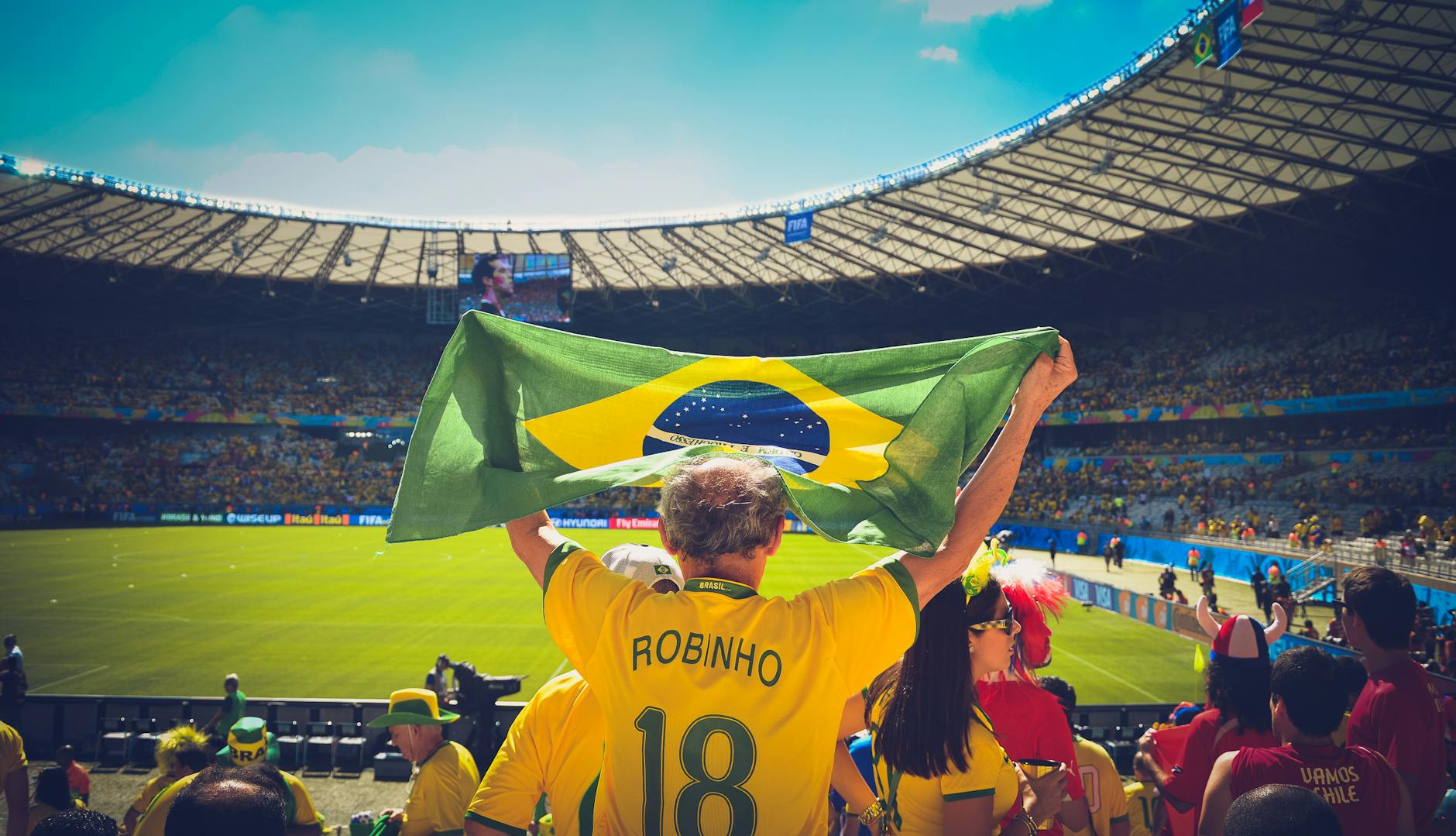
Photo by Caio on Pexels
What Is the Verdict?
The verdict is that FIFA World Cup forecasting is strongest when it treats football as a changing information system rather than a collection of famous teams. The 2026 edition’s 48-team field, 104-match schedule, North American geography, and new knockout pathway will generate more data but also more opportunities for analytical overconfidence. A sound process begins with FIFA’s official information, then checks tactical fit, player condition, incentive structure, and market probability, while recording every stake, return, rebate, and net result separately. Tactical Review is designed for that workflow, providing match predictions, team tactics, player statistics, and daily tournament coverage for fans tracking the 2026 World Cup.
Use this final checklist before acting on any prediction:
- Confirm the current rules, venue, kickoff time, and qualification scenario.
- Wait for reliable lineup and injury information where practical.
- Compare tactical data against opponents of similar quality.
- Calculate implied probability and bookmaker margin.
- Set a fixed entertainment budget and stop when it is reached.
- Review performance over a meaningful sample, not one dramatic match.
The contrarian conclusion is uncomfortable but useful: the best analysis may sometimes be refusing to take a position. If the lineup is unclear, the incentive is ambiguous, or the available price has already collapsed, uncertainty is not a failure; it is the correct measurement. Therefore, track process quality before celebrating isolated accuracy, and treat every result as evidence rather than validation. Ready to follow the 2026 tournament with a more controlled method?
Frequently Asked Questions
Q: What is the FIFA World Cup?
A: The FIFA World Cup is FIFA’s premier men’s international football tournament, contested by national teams representing qualifying member associations. The 2026 edition will be hosted by Canada, Mexico, and the United States, with 48 teams playing 104 matches. The tournament will use 12 groups of four teams before a Round of 32, followed by the knockout stages.
Q: How can I analyze a FIFA World Cup match?
A: Analyze a FIFA World Cup match by checking the fixture context, recent competitive data, tactical matchup, confirmed lineups, venue conditions, and available price. Start with FIFA’s official information, then compare expected goals, shot quality, pressing, set pieces, and player minutes. Finally, record your probability estimate separately from the result so one lucky outcome does not distort your evaluation.
Q: What is the difference between FIFA ranking and team strength?
A: FIFA ranking measures international results through an official rating system, while team strength analysis also considers tactics, injuries, opponent quality, and current form. Rankings are useful for an initial baseline but may lag behind major coaching or squad changes. A lower-ranked team can therefore present a difficult matchup against a highly ranked opponent whose key players are unavailable.
Q: Why does a World Cup prediction fail even when the favorite wins?
A: A prediction can fail financially even when the favorite wins because the available price may not justify the estimated probability. For example, a selection assessed at 60% probability has fair decimal odds of approximately 1.67; taking 1.50 requires a much stronger probability to create theoretical value. Lineup changes, penalties, red cards, and late tactical adjustments can also invalidate a pre-match assessment.
Q: How much does it cost to follow FIFA World Cup analysis?
A: Following basic FIFA World Cup information can be free through FIFA, national football associations, and reputable media, while specialist data services may charge subscription fees. Tactical Review provides tournament-focused coverage of predictions, tactics, player statistics, and 2026 developments. Any betting budget should be treated as entertainment spending, kept separate from essential expenses, and never increased to recover losses.
Q: What should I do if a betting account balance or withdrawal does not work?
A: First check identity verification, payment-method ownership, location rules, wagering conditions, and the operator’s published withdrawal policy. Save transaction IDs, timestamps, screenshots, and support responses, then contact the licensed operator before escalating to the relevant regulator. Do not deposit additional money simply to unlock a withdrawal unless the terms are clear, lawful, and fully understood.
Q: Is FIFA World Cup betting worth it?
A: FIFA World Cup betting is only worth considering as controlled entertainment when the participant understands the risks, uses a fixed budget, and accepts that most predictions will contain uncertainty. Tournament emotion, public bias, and rapidly changing lineups can make markets difficult rather than easy. If tracking stakes, returns, rebates, and net position feels uncomfortable, following the matches without betting is the safer decision.